
DataKit for OpenAI
The Missing Piece to Building Your Application
OpenAI gives you AgentKit for orchestration and ChatKit for UI. DataKit provides the safe, secure connection to your databases.
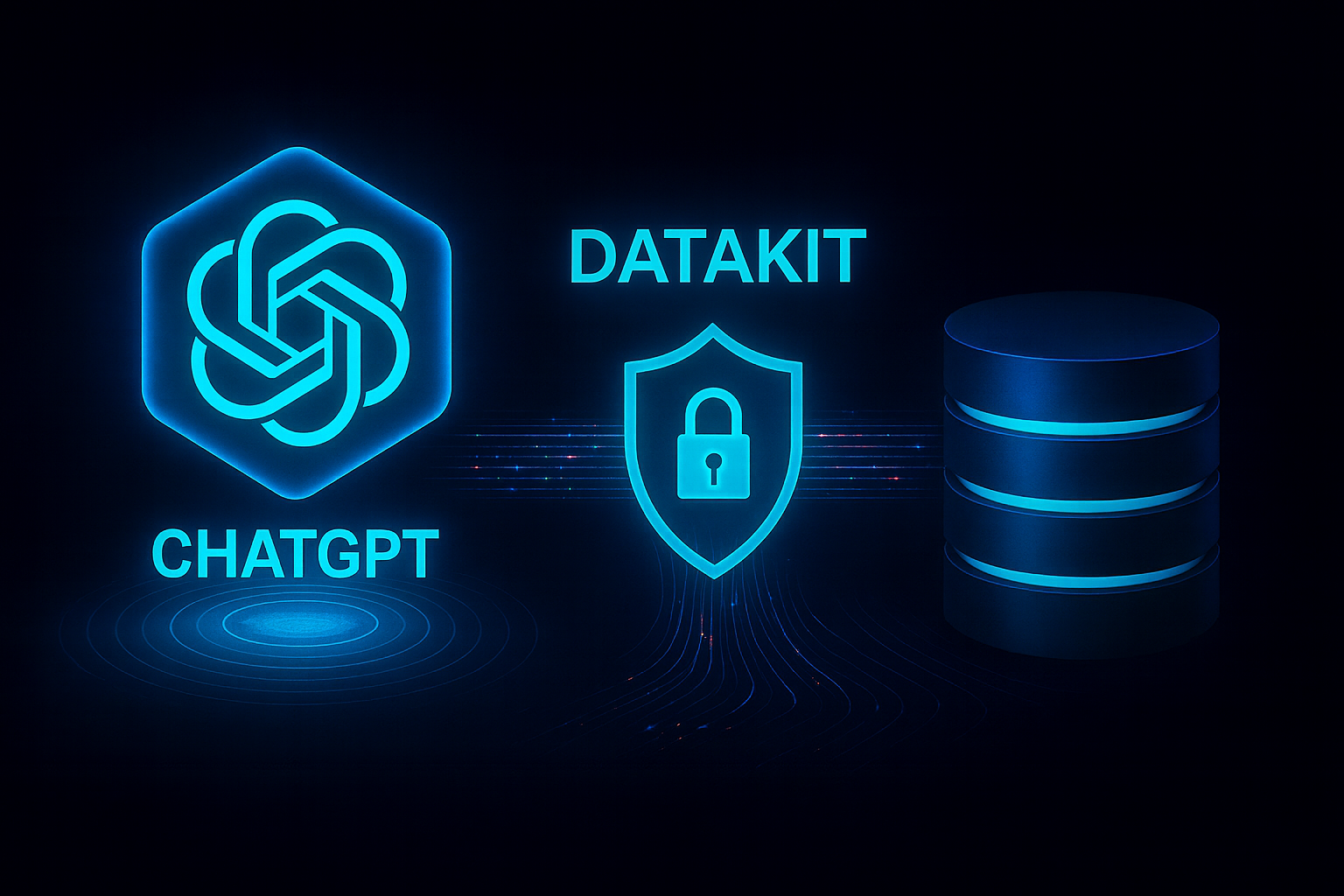
The Complete Agent Stack
OpenAI's AgentKit provides powerful visual workflows for orchestrating multi-agent systems. ChatKit gives you embeddable UI components for chat-based experiences.
But there's a critical gap: secure enterprise database connectivity.
AgentKit
Visual workflows, multi-agent orchestration, guardrails
DataKit
Enterprise SSO, semantic layers, secure authorization
ChatKit
Embeddable chat UI, streaming responses, branded experiences
Why the Connector Registry isn't enough: While it manages cloud storage (Dropbox, Google Drive) and basic integrations, it doesn't provide the enterprise-grade security, governance, and semantic understanding required for production database access.
What DataKit Provides
Four critical capabilities that enable production-ready agent-to-database connectivity
Semantic Layer
Business ontology that translates raw database schemas into concepts LLMs understand
cust_tbl → Customerinv_dt → Invoice DateAdd fiscal calendars, computed metrics, and business rules not in the database
Enterprise SSO
SAML/OIDC integration with your existing identity providers
MFA policies, directory sync, and automated provisioning all apply
Secure Authorization
Token pass-through from AI to database with user-level access controls
Existing row-level security and RBAC continue to work
Audit & Governance
Full visibility and compliance-ready access tracking
Data governance policies enforced at the connection layer
Ready for SOC 2, HIPAA, and GDPR compliance
Secure MCP Implementation
Model Context Protocol (MCP) is insecure by default. DataKit implements it correctly.
Authorization Flow
User Authentication via SSO
User authenticates through enterprise IdP (Okta, Entra ID) with MFA
Token Generation
DataKit receives identity token and generates session with user context
AgentKit Request
Agent workflow initiates database query through MCP with user token
Semantic Translation
Natural language query is translated using business ontology into SQL
Database Execution
Query runs under authenticated user's database role with row-level security applied
Audit Logging
Query, results, and user identity logged for compliance and governance
⚠️MCP Without DataKit
- • Shared service account credentials
- • No user-level access controls
- • Direct schema exposure to LLMs
- • Limited audit trails
- • Manual governance enforcement
✅MCP With DataKit
- • Individual user authentication (SSO)
- • Row-level security preserved
- • Business semantic layer
- • Comprehensive audit logging
- • Automated compliance enforcement